Showing posts with label Forex. Show all posts

Saturday, 9 August 2014

time money quality of the daily time frame 

Let’s face it, most people are struggling with their trading. We’ve all been there, blown accounts, gotten upset over failing, and been left wondering where it all went wrong. As you replay events over and over in your head, you eventually ponder to yourself, “What time frame is going to work best for me?”

Rest assured, you’re not alone. This is a question a lot of traders are looking to get closure on. If you’ve spent some time checking out the popular Forex forums, you would have noticed that most traders gravitate towards scalping or day trading. You probably thought, “Well if everyone else is doing it, it must be the way to go, right”? Nine times out of ten, traders are banging their heads in frustration because they’ve ‘followed the herd’, and ended up using deadly high frequency trading strategies on the low time frames.

When traders come to me and ask me why they aren’t doing so well, I recommend they make the switch to the daily time frame. Surprisingly, most are very hesitant to make the switch. The reason the majority of traders are reluctant to change stems from a few misconceptions of using the higher charts, like the daily time frame.

Today I am going to cover the most common ‘issues’ traders have with moving their trading to the daily time frame, and put any concerns you have to rest.

The daily time frame is too expensive to trade

The first suggestion I make to trouble traders is to try make all their trading decisions from the daily time frame. The most common response I recieve back is, “How can you expect me to trade the daily time frame when I have such a small account?” Too many traders believe they are restricted to short time frames because of their account size.

The belief that the daily time frame is too expensive to trade flows from the idea – the wider your stop loss, the more expensive the risk. It’s true your stop loss will be wider when you trade with trade signals on the daily time frame, but it doesn’t mean you have to risk any more money than you want to.

Your account size does not restrict you from trading on the daily time frame in any way!

 Traders who believe the daily time frame is too expensive to trade, simply don’t understand how to calculate position size correctly. Lot sizing is calculated mathematically, so you can risk any amount of money into a stop loss of any size.
taking risk on daily time frame
It’s possible to risk $100 into a 10 pip wide stop, or a 100 pip wide stop. If you’re on a micro account, you could calculate your position size accurately to only risk small amounts, like $5 into a 70 pip stop for example. There is no restriction on what money you risk over what stop size, it’s just simple mathematics and really should be the bread and butter of your money management skills.

I won’t bore you by going into all the math here. If you’re serious about learning how to position your trades on the daily time frame, or any time frame for that matter, we offer a comprehensive guide to calculating lot sizes inside our advanced price action course. In the meantime there are plenty of free position size calculators out there which will do the job for you. Like the Babypips position size calculator.
Just so we’re both clear. It doesn’t matter if you have a $10, $100 or $1000 account. You don’t have to miss out on the benefits the daily time frame offers.

Longer time frames are not as profitable
The majority of traders, especially the newbies, are so focused on short term charts, because they have no concept of what trading is really about. Many traders believe if you put in the hours, you will get the returns. Why do people think like this? Think about it, if you put in the extra overtime at your day job, and your boss is nice enough, you will generally be rewarded for your extra enthusiasm and efforts. It’s crucial you don’t the mistake of trying to integrate real-life logic into the market, they are a dangerous mix.
The lower time frames will generate more signals, but they are much lower in quality. While working in an environment like the 5, 15 and 30 minute charts, you’re basically trading ‘market noise’. Granted, the longer time frames won’t roll out trade setups at such a high pace. But, the signals that are generated on the daily time frame are much more reliable, and have a much better chance of working out.
It’s a no brainer, the daily time frame offers more clarity by providing the ‘bigger picture’. It’s much easier to identify the core price movements, and peer into the market psychology. Signals on the daily time frame contain more value as good trading opportunities, because they contain more price data within the signal. A signal on the 15 minute chart contains a fraction of the data, therefore making it less reliable.
Signals on the daily time frame generate good follow through with price movement, allowing for a better chance to hit a 1:3 risk reward on your trade. A trade setup on the 15 minute chart is at high risk of being destroyed from the normal day to day volatility.
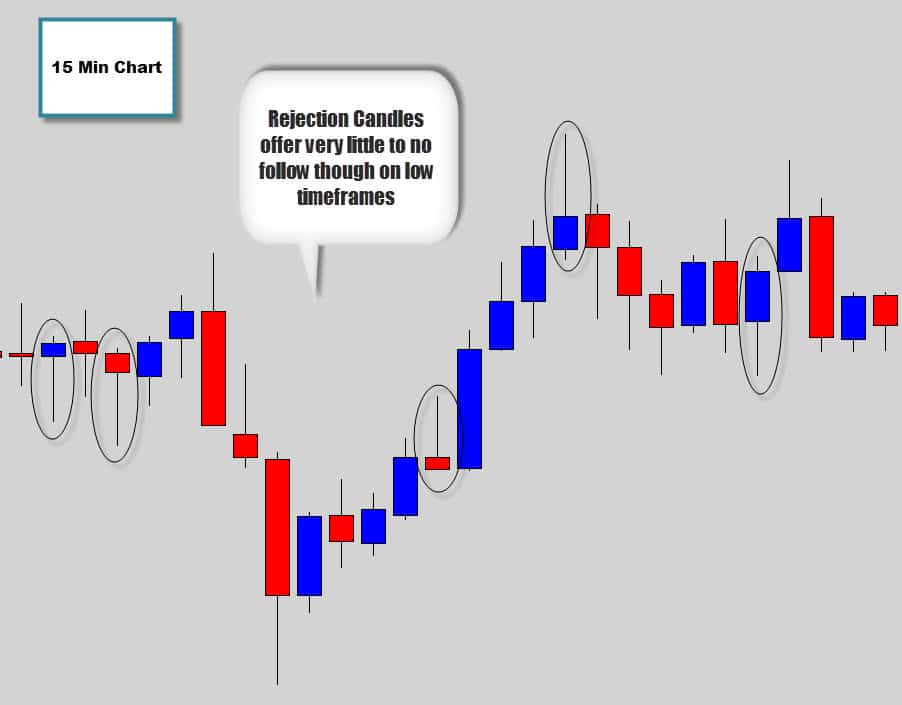
15 min chart low follow through

These rejection candles that formed on the 15 minute chart during typical market conditions offered very little to no price follow through. These would be very frustrating and not very profitable to trade.

Now have a look at the daily chart and check out the difference…
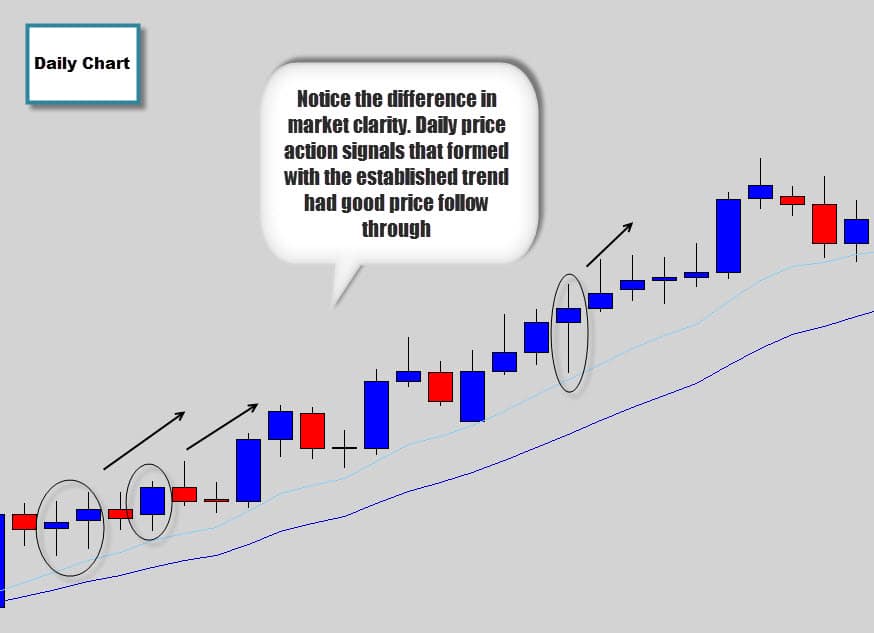
daily time frame good follow through

The first thing that clearly stands out is the core market direction. The daily time frame prints this loud and clear whereas the 15 minute chart was very difficult to determine where the market wanted to go.

Trade signals that formed in line with the dominant movement on the daily chart saw much better price follow through.

The longer YOU’RE in a position the higher the risk
There are traders that will push the idea of being ‘in and out’ of the market, claiming it is less risky than holding positions on a longer term. This is built on some bad logic, it generally goes something like this…
When you enter and exit the market really quickly, you won’t be in danger of being stopped out if the market reverses on you. 

Think about it, you’re always going to be at risk of being stopped out from an unexpected market event, no matter what strategy you use. The funny thing is, you’re more likely to be stopped out by some intra-day volatility when you take low time frame setups, and use stop losses that are tighter than a bee’s backside.

The daily chart filters out this intra-day noise, and provides you with more reliable data. Most daily time frame setups are unaffected by the intra-day volatility that knocks the scalpers around. You’ve instantly gained more of an edge just by working with daily time frame.

Lower time frames require you to be at the computer and monitor price movements for hours on end. Most short term traders initially love the ‘thrill’ and the ‘action’ the fast pace charts provide, but it’s only a matter of time before you experience ‘burnout’. Emotions like greed and fear start to become dominant factors in your trading decisions and put you in a state of mind where you’re at high risk of spiralling out of control.

The daily time frame sets you up for success straight away. You spend a fraction of the time in front of the charts. You’re at less risk of experiencing ‘trader burnout’ and it’s going to be much easier to keep a cool head while maintaining your discipline.

Positions are dangerous to hold overnight

This statement is typical day trader’s mentality. “You’ve got to close your position by the end of the day”. The Forex market is open for 24 hours, 5 days a week. It is fair to say that holding positions over the weekend can be a little risky due to unexpected weekend gaps, that’s a completely different topic. There is no benefit to closing your trades at the end of the day in a continuous market.

In fact, you could actually be shooting yourself in the foot by closing off your trades early in this fashion. It’s not uncommon for trades to take one or two days before you see the ‘breakout’ from the setup. Have a look at the example trade setup shown below, a bearish rejection candle on the daily time frame…
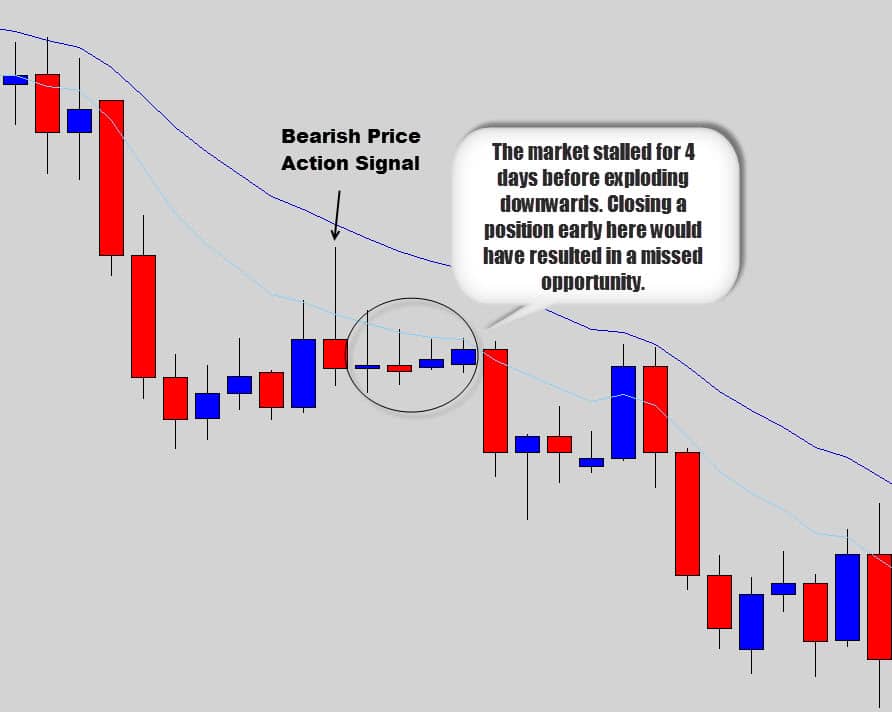
4 day market stall on the daily time frame

This is a good example of why we need to be patient and let the market do what it needs to do. Closing before the end of the day would have ensured you were left standing behind, regretting a lost opportunity.

I know it would be great if you could enter a trade, then price shoots off and hits your target straight away like a cannonball. The reality is, some trades may dip into the negative one or two times before maturing into profit. You need to let your trades have a chance and give the market the opportunity to do its thing.

Price movements on the daily time frame are hard to predict

This rumour branches from the everlasting argument of technical vs. fundamental analysis. These days technical trading is considered only effective for the lower charts and fundamental analysis is for the daily time frame. Some push the idea that you need to be good with economics to follow long term movements.

Technical analysis works on the daily chart, in fact it works better on the daily chart because the daily time frame provides more reliable data. The noise generated on the lower time frames will distort your technical analysis and usher you into false signals.

Thanks to the clarity the daily chart brings to your screen, good trading opportunities are very easy to identify. That’s not generally the problem, the issue is shifting your focus towards less intense trading. Large gains that are up for grabs on the daily time frame can work to change a struggling intra-day scalper into a calm swing trader.

Take a look at the example below…
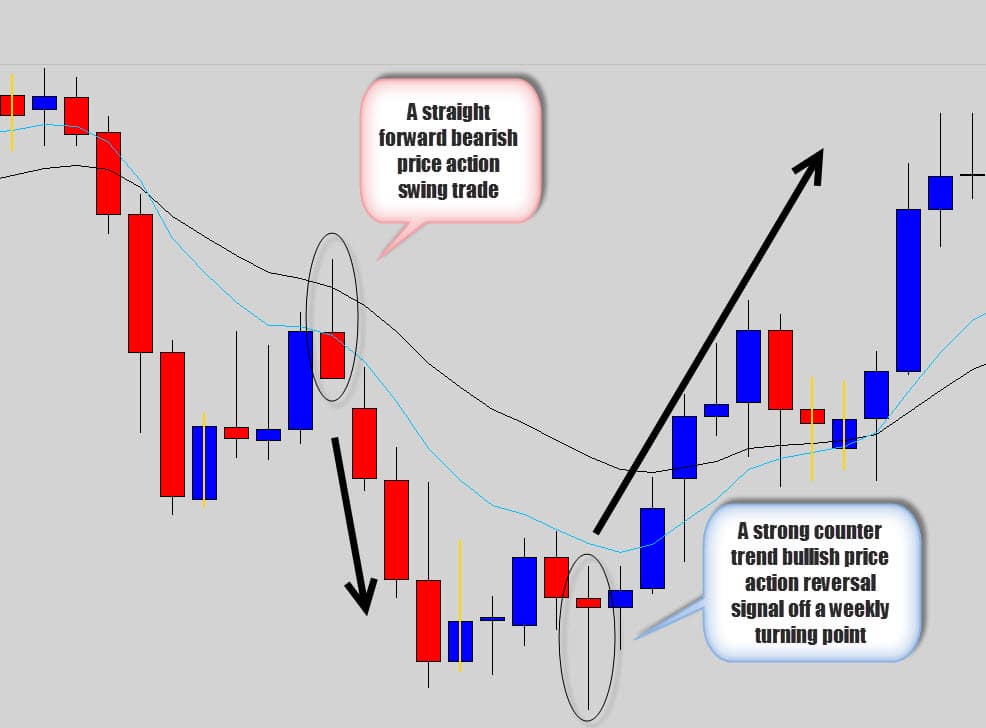
nice daily time frame price movements

The examples of the price action signals above are good examples of how easy it can be to anticipate future price movements using simple technical trading signals. Myself and many of the other War Room traders jumped on board both of these price action setups. The simplicity of these kind of setups is one of the major benefits of price action.

It’s time to stop chasing ghosts on the 15 minute chart and start trading the right way. Just by switching over to the daily time frame you’re making necessary corrections to begin paving the way to trading success.

The daily time frame requires less time, provides a clearer picture of the market and allows you to be more objective. The reduction in screen time puts you at less risk of becoming mentally or emotionally unstable and give you the opportunity to enter trade setups that yield greater returns. Get it out of you head that more work equals more money.

If you would like to learn how to trade the lazy way by taking advantage of all the benefits the daily chart offers. Check out our price action trading course, we teach how to combine price action strategies with the daily charts in a stress free way that will fit into your busy life.

I hope you found this article useful and can now see how beneficial making the switch to the larger time frames can be. Why not tell your friends about it too by clicking one of the buttons below? They’ll thank you for it… trust me!

Tuesday, 16 April 2013

Sejarah Matawang Dunia Yang Pelik Dan Unik


Sejarah wang merupakan suatu perjalanan cerita yang menjangkaui tempoh ribuan tahun dan pada hari ini kajian saintifik mengenai wang dan sejarahnya dipanggil ilmu numismatik.

Salah satu ciri mata wang atau duit ia mestilah sesuatu barang yang kurang penawaran atau sukar didapati. Banyak barang yang telah digunakan sebagai wang, daripada logam berharga dan cangkerang yang memang sukar dijumpai kepada rokok dan seterusnya wang yang dicipta manusia seperti wang kertas. Wang moden (dan kebanyakan wang purba juga) sebenarnya hanyalah sebagai simbol dalam erti kata lain, konsep abstrak).

Hari ini, wang kertas adalah bentuk wang yang paling lazim digunakan. Walau bagaimanapun, benda-benda lain seperti emas atau perak mengekalkan kebanyakan ciri penting sebagai wang. Berikut ini adalah sejarah dan maklumat 9 mata wang dunia yang agak pelik dan unik.

9. Wang Dari Lembaran Kayu (Jerman)
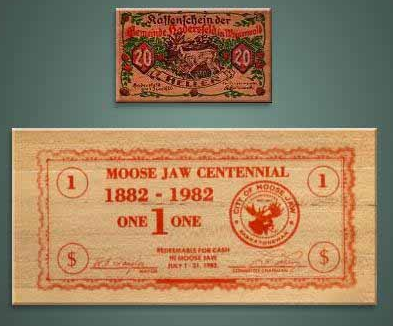
Pernah digunakan sebagai wang semasa darurat di Jerman semasa pemulihan selepas Perang Dunia I. Kerana darurat, wang dicetak juga daripada kerajang aluminium, kain sutera dan kad dari sisa-sisa perang. Pengumpul akan sanggup untuk membayar dengan harga yang tinggi untuk wang pelik ini, yang paling mahal adalah batu yang dicetak menjadi duit syiling pada masa itu.

8. Wang Dengan Ancaman Hukuman Mati (Amerika, ketika masih dijajah Inggeris)
US Dollar memang telah menjadi mata wang yang paling stabil dan dianggap sebagai safe heaven currency. Jika dilihat dari sejarahnya, mata wang ini telah banyak berpengalaman dalam memerangi para pemalsu wang. Pada masa-masa awal penjajahan Inggeris, sangatlah mudah untuk mencetak wang kerana banyak alat cetak beredar dan reka bentuk cetakan wang tidaklah terlalu rumit seperti sekarang

7. Wang Kumpulan Baucer (Vietnam)
Jika kita fikir wang yang boleh membeli segala-galanya, ia tidak. Wang Vietnam pada tahun 70-an berfungsi sebagai koleksi baucar yang hanya boleh digunakan untuk membeli pakaian dan peralatan.

6. Mata Wang Berbentuk Komoditi
Garam adalah salah satu barang tertua yang digunakan sebagai bayaran. Sebenarnya, kata “salary” (gaji) berasal dari bahasa Latin “salarium” iaitu wang yang telah dibayar kepada perajurit Rom untuk membeli garam.
Garam juga juga digunakan sebagai alat tukar (mata wang) utama di gurun Sahara selama berabad-abad lamanya, dan digunakan secara meluas di seluruh Afrika Timur. Biasanya, seseorang pada masa itu akan menjilat garam satu blok untuk memastikan garam tersebut asli dan memutuskan untuk membuat pecahan dari blok itu sebagai pecahan wang kecil.

5. Wang Pecahan Terbesar Di Dunia (Hungari)
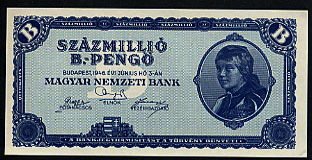
Inilah pecahan mata wang pemegang rekod sehingga kini. Dicetak oleh Hungary pada tahun 1946 dengan nominal 100,000,000,000,000,000,000 pengo. Ya! Seratus juta trilion pengo dengan kadar ketika itu hanya sekitar 20 US cent. Ini disebabkan Hungary mengalai hyperinflasi akibat kesan dari Peperangan Dunia Kedua.

4. Modifikasi Wang Kerana Rampasan Kuasa (Zaire)
Ketika rejim Joseph Mobutu dirampas kuasa pada tahun 1997 di Zaire (yang kini bernama The Democratic Republic of the Congo) Pemerintahan yang baru ketika itu terlalu sibuk untuk merekabentuk dan mencetak wang baru kerana jumlah wang ketika itu terhad

3. Kulit Tupai Sebagai Mata Wang (Rusia)
Beberapa kurun yang lalu, kulit tupai merupakan wang yang sah digunakan di Russia. Bahkan beberapa bahagian dari tupai mati ini seperti telinga, hidung, dan kuku-kukunya berfungsi sebagai “duit baki”.

2. Syiling Perak Dengan Bonus Air Suci (Kepulauan Palau)
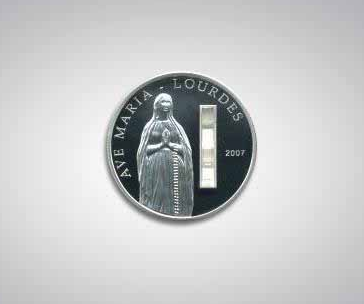
Jika di wang kertas USD ada “In God We Trust”, negara kepulauan Palau selangkah lebih maju. Negara ini pada tahun 2007 mencetak syiling perak dengan gambar perawan suci dan memasukkan bonus botol kecil mengandungi beberapa titis air suci dari sebuah mata air suci di Lourdes Perancis. Negara ini pernah juga memasukkan mutiara, bahkan batu meteor pada duit syilingnya

1. Wang Dari Batu (Pulau Yap, Kep. Solomon)
Di pulau Yap, sebuah pulau di Kepulauan Solomon, anda akan menemui “wang” terbesar dan teraneh di dunia: batu rai (semacam batu kapur). Wang ini berbentuk lingkaran dengan diameter 12 kaki dan berat 8 tan.
Tahukah anda? Penilaian nominal dari batu ini ditaksirkan bukan hanya berdasarkan saiz, tapi juga ditaksirkan berdasarkan pengorbanan menbawanya ke Pulau Yap, termasuk jumlah nyawa yang terbunuh kerana pengorbanan tersebut. Kerana bentuknya besar, wang ini dibiarkan terbaring di luar rumah pemiliknya, bahkan kadang-kadang di dalam hutan. Walaupun terbaring di mana sahaja, orang pasti mengetahui siapa pemiliknya. Apabila berlaku pertukaran pemilikan, akan dilakukan dalam upacara tertentu.

Clement Jouling ialah Perunding Unit Amanah berlesen (Licensed Unit Trust Consultant). Sekiranya anda berminat untuk mengetahui lebih lanjut tentang pelaburan unit amanah, boleh hubungi beliau terutamanya buat anda yang berada di Kota Kinabalu dan sekitarnya.

Sunday, 24 February 2013

A Simple Plan To Dramatically Improve Your Trading


Let me ask you a question, and please answer yourself honestly: Do you have a plan of action for your daily trading routine or do you just open your charts and randomly start trying to find trades with no logical guidance behind your actions?

Plans give you a “roadmap” of how to go about getting what you want in life. Not having a plan for something makes it harder, it doesn’t matter what it is. Even if you are planning a family vacation that should be full of enjoyment and relaxation, if you don’t have at least a basic guide as to what you will do each day, it’s probably going to end up being confusing, semi-chaotic and highlighted by fights and disagreements rather than fun and laughter. Planning makes everything simpler and easier to accomplish, and a simple plan can put even a complex or lofty goal within reach.

Today, I am going to lay out a simple plan that you can use to improve your trading. The only “catch” with this is whether or not you have the discipline to stick to it. Most people struggle with discipline in the markets, but simplifying your daily trading routine can make it easier to stay on track and remain disciplined. So, let’s discuss the various components of this simple plan that I’ve designed for you and then next week you can get started following it and see if your trading improves.

Note: The steps below are meant as a basic trading guide or plan to help struggling or beginning traders. If you are serious about using this plan, then you should follow it for at least two or three months and then tweak it as you see fit after that.

Step 1: Trade only major markets

The first step to this simple daily trading guide is to be sure you’re only analyzing some of the major markets. I like to stick to the major forex currency pairs as well as spot Gold, Crude Oil and Dow. Here’s the symbols for the markets that I follow the most frequently and the ones you should follow for this simple trading plan:

EURUSD, GBPUSD, AUDUSD, NZDUSD, USDCAD, USDJPY, EURJPY, GBPJPY, AUDJPY, XAUUSD, WTI, DJ30

That’s 12 markets, more than enough to focus on. If you’re in the USA and you can’t trade spot Gold, Crude or Dow then just focus on the currency pairs I’ve listed.

There really is no need to analyze 20 or 30 markets like many traders do. Besides, if something big happens that really moves the markets, it’s probably going to show up as a price action signal on one of the 12 markets I’ve listed above anyways. If you really want to simplify your daily trading routine, you should scale-back the markets you analyze so that you are just focused on a handful of major markets. The first step in this simple plan is to figure out the markets you will trade and make sure you’re not looking at more than 10 or 12 per day, the list that I use above is suitable for any currency trader to use.

Step 2: Clean up your charts and only trade daily charts

Next, it’s time to get your charts setup. Open the daily charts of the markets I’ve discussed above, or whichever 10 or 12 you want to follow. If you don’t know how to get your charts looking like mine, then read this metatrader 4 tutorial that I wrote, it will help you get all setup.

The second requirement for this simple trading plan is to only look at and trade the daily chart time frames, if you start looking at the 4 hour and 1 hour charts or below, you will have broken your discipline, and I can only vouch that this plan will work for you if you follow it to the T.

Step 3: Pick one setup to trade

This step is critical; you will only be trading one price action signal for this trading routine. Last week, I wrote an article on how to master your trading strategy, I suggest you go read that before implementing the plan I’m laying out in this article. Eventually, you can try learning different entry signals, but for the purpose of this simple trading plan I am designing for you this week, you should only trade one signal. If you start to see that you’ve stopped losing money each month and that your account is growing slowly but surely after using this plan for two or three months, then you can start implementing different entry signals. But, for now, I need you to understand that you have to narrow your focus, remove variables and reduce clutter from your mind and charts to really “turn the corner” in your trading, and the best way to start this process is learning to become a master of one setup at a time.

Step 4: Follow this money management plan


For purposes of simplicity and to show you the power of risk reward, all the trades that you take while following this plan will be set at a 1:2 risk reward. That means, your profit targets will be twice the dollar amount as your risk.

The way to place your stop loss properly is to use the surrounding market structure to figure out the most logical place to put it that gives the trade the best chance at working out but also is not too far away. What this basically means is that you should not place your stop an arbitrary level because you want to trade a certain position size…this is greed, and it will end up working against you in the end. You should have predetermined your 1R risk per trade (this is the dollar amount you risk per trade), then when you find a setup you want to trade you figure out the safest and most logical place to put the stop loss…then you adjust your position size so that you are only risking your predetermined dollar risk amount.

You will place your profit targets with the aim of getting a 2R reward on every trade; that just means two times your risk. However, in placing targets you do also need to consider the surrounding market structure; if a logical 2R reward is not realistically possible because a large key level is in the way, then you might have to reconsider taking the trade.

After you figure out the most logical stop placement you will then adjust your position size down or up to meet your predetermined dollar risk amount. If you need more help on this topic of position sizing, check out this article on risk reward and position sizing.

Step 5: Track your progress in a trading journal

The next part of this simple plan is to make sure you’re recording everything in your trading journal. If you do not have one you can get a trading journal here. Keeping a journal of all your trades is probably something that many traders forget about or that falls to the wayside after a few weeks…but you can’t let it. You NEED the track record created from keeping a journal to make trading feel more like a business and to bring more of a process into your trading routine. The actual process of entering your trades and journaling them will help to keep you disciplined because it reflects back to you your trading results. If your trading results show that you’ve made emotional trading errors like risking more than you knew you should per trade or entering stupid trades that you knew you shouldn’t have…you will see these things in your journal and hopefully you’ll stop doing them.

It’s easy to be lazy and gamble your money in the markets, but when you are forcing yourself to keep a journal of all your trades you will be a lot more aware and conscious of your behavior in the market. If your behavior is that of a gambler, you will then clearly be able to see that YOU are the problem with your trading and that you need to adopt the proper trading mindset to succeed. If your trading journal begins to show a pattern of consistency in following your risk management model and your trading strategy…it will be something you can proud of…few traders have a track record that they are confident in showing to other people or potential investors. You have to use the trading journal as a tool to reinforce positive trading habits and help eradicate negative ones, and you do this by forcing yourself to manually record your trades, think about them and analyze them.

Step 6: Follow the plan

Now, clearly the plan I’ve laid out today will not work if you don’t follow it. You need to be sure that if you commit to this plan you actually follow it. Give it at least two months, and then evaluate where you’re at. Maybe you’ve stopped losing money and are breaking even now, maybe you’ve made a nice profit each month, either way it’s an improvement over losing money each month, and that is the point of the simple plan I’ve laid out here today for you; to get you off the track of hemorrhaging money from your trading account and onto the track of slowly but surely becoming a profitable trader.

Step 7: Challenge yourself


Perhaps the best way to think about the guidelines I’ve laid out for you in today’s article, is that they are a challenge to yourself. Many people have trouble completing even the seemingly simplest tasks; reading a book from cover to cover in two weeks, getting to work on time or early each day, exercising three times a week consistently…whatever the task, it can be very hard for many people to stay focused on it long enough to see its benefits pay off. In trading, this trouble with focus and discipline is an even bigger problem than in most other things we do; because in trading your hard-earned money is on the line each day.

To end today’s lesson, I want you to do something if you’re really serious about following this simple plan that I’ve laid out here today. I want you to either print out this lesson and sign the bottom of it as a pledge that you will follow it, or write yourself a little “commitment” pledge and print it out and sign it. Hang this paper on your wall next to your trading desk or put it somewhere where you will see it each day before you trade. The first step to becoming a profitable trader is seeing if you have the discipline and patience to stick to a simple plan like this for two months. After two months, come back and leave me another comment on this article or drop me an email and tell me about your trading results. If you want to learn more about simple trading strategies that can help you dramatically improve your trading results, checkout my Price Action Trading Course here.


Clement Jouling ialah Perunding Unit Amanah berlesen (Licensed Unit Trust Consultant). Sekiranya anda berminat untuk mengetahui lebih lanjut tentang pelaburan unit amanah, boleh hubungi beliau terutamanya buat anda yang berada di Kota Kinabalu dan sekitarnya.

Thursday, 21 February 2013

Trade Responsibly Chapter 2: Trade With the Trend

Vote up: 1 Vote down: 0

You’ve probably heard the expression: “Make the trend your friend”. For many, this basic idea has already been forgotten and regarded as yet another cliché. Nevertheless, it is still very relevant.

If your system involves looking at 1 hour charts, check out the 4 hours charts and the daily charts to get the bigger picture. What is the general direction of your currency pair?

Are the larger scoped charts headed lower when you place a long position? Maybe it is time to rethink your position.

Sure, you can money on corrections. If the pair approached a resistance line and the general direction is up, you may short the pair when it approaches the line and profit off the bounce. But let’s remember two things:

This could be the break: Perhaps the pair has enough momentum to cross the line this time. If the general direction is higher, you don’t want to be the contrarian in this case, as your trade will lose.

Corrections are smaller: Breakouts are usually stronger than corrections. Many traders use Fibonacci lines to measure the potential of the correction. Using this theory, a correction is 38.2%, 50% or 61.2% of the move while a breakout has a larger potential of covering 100% of the previous range, according to the same theories.

Of course, breakouts can be false, and may not yield the desired results. There are ways to cope with false breakouts, and in many cases, the preliminary false breakout is a preparation for the big move. The wider trend longer term trend has a better chance of being the winning one.

Trying to outsmart the markets sounds bold and can make a great impression on your friends, but you won’t be running to boast your victories to your friends if this strategy turns out to be a losing one.

Sideways
When the currency pair of choice trades sideways, there is no trend in theory and both directions can work. Also in this case, it is important to have another look and try to identify if any direction, up or down is emerging.

Has the pair recently been trading in an uptrend or downtrend channel within the current range? What is the news about the currencies in question? In some cases, a potential direction can emerge for the pair and you could be aware of this and take advantage of this.

Flat ranges aren’t forever. The pair will eventually break out, and making a deeper analysis can help you find the right direction.

Source: http://lottinggi.blogspot.com/2013/02/trade-responsibly-chapter-2-trade-with.html
Clement Jouling ialah Perunding Unit Amanah berlesen (Licensed Unit Trust Consultant). Sekiranya anda berminat untuk mengetahui lebih lanjut tentang pelaburan unit amanah, boleh hubungi beliau terutamanya buat anda yang berada di Kota Kinabalu dan sekitarnya.

Trade Responsibly Chapter 1: Money Management


Isn’t money management a nice buzzword? Many forex brokers flash around this nice phrase. I’m sure you’ve heard it many times. How can you turn this buzzword into practical, actionable advice?

As with any type of investment, there is risk. The idea is to control your risk and be aware of it. This will save you from the infamous margin call, as well as let you control your account in a better way.

1. Limit the risk: When you open a trade, place a stop loss order to get you out of your trade and prevent a situation where you lose too much. This states the obvious for the vast majority of traders reading this, but I still know some traders who don’t use a stop loss order. This precarious deed is done also by people who work at forex broker firms and trade with their account. Sad but true.

2. How much money are you risking: Many traders calculate the risk / reward ratio. Some look for 2:1 or 3:1. That’s great. But how many dollars are you actually risking? This data is available with most brokers. Is this sum too high? In that case, there are two mathematical options to reduce the amount of money you risk:
1. Tighten your Stop Loss: In this way, less money is at risk. Sounds good? Not exactly. Perhaps your new Stop Loss is too tight and will yield an immediate loss to that position. Lowering the amount of money you risk doesn’t mean raising the chances of a loss! The stop loss point should be based on your analysis: technical, fundamental or a combination. It shouldn’t be based on the amount of money risked.

2. Lowering the position size: With a lower position size, you will still get to place the stop loss point in the right place for you, but the money that is risked will be lower. Yes, also the rewards side will be lower. And yes, it is tempting to trade large positions. But remember: this is leveraged money, not real money that you have. By lowering the position size you still get to trade your position in full, and just risk less cash.

3. How much of your account are you risking? OK, you already see the amount of dollars that you are risking, but saying it bluntly: what is your burn rate? Let’s say you have an account of $1000 and you risk 20%. Now your first trade has gone bad, and you lose $200. You stick to your method but it doesn’t work out again and you lose another $200. In 5 trades you are out, liquidated, margin-called. If you are new to forex trading, you are likely to make more mistakes and lose more in your initial trades. Risking a big portion of your account means that you can burn out quickly before you had enough time to learn, improve and win enough trades.

A rule of thumb: Don’t risk more than 2% of your account!

I know this sounds very strict, but this rule will help you survive, learn and eventually increase your chances of having sustainable profits in forex trading.

A forex demo account is very useful for practice, but it doesn’t fully simulate the real thing – not in execution (detailed later) and not in the emotional stress. Having enough opportunities to trade helps you trade better.

Clement Jouling ialah Perunding Unit Amanah berlesen (Licensed Unit Trust Consultant). Sekiranya anda berminat untuk mengetahui lebih lanjut tentang pelaburan unit amanah, boleh hubungi beliau terutamanya buat anda yang berada di Kota Kinabalu dan sekitarnya.