Tuesday, 16 July 2013

Amanah Saham Bumiputera (ASB) vs Unit Trust Fund

Comparison
ASB
Malaysia Equity based Unit Trust Fund
Unit Price
The unit price for ASB is fixed at RM1 per unit. ASB is what you call a fixed price fund. That means if you invest RM1000 into ASB, you'll get a 1000 units in return. After twenty year, if you intend to redeem your units, the 1000 units is sold at the price of RM1/unit as well. With the unit price fixed, investors need not worry about when is the best time to redeem their units.
The unit price of Unit Trust varies according to the daily Net Asset Value of the fund. Normally if the stock market is bullish, the unit price of a unit trust goes up and vice versa. Say for example you invest RM1000 into a fund that is currently price at RM1/unit. You'll get 1000 units in return. After 20 years, say the price per unit has gone up to RM1.50/unit, selling your 1000 units will return you RM1500. Investors are exposed to the possibliity that the unit price at the point of redemption could be lower then the price when they purchase the unit. This however can be mitigated using the Dollar Cost Averaging method.
Dividend + Bonus
Annually, ASB will announce it's dividend and bonus returns. For 2012, ASB distributed 8.9% worth of dividend  and bonus. Investors can choose to reinvest by purchasing more ASB units or withdraw the distribution.
Most unit trust funds declare yearly dividend. The dividend varies from one fund to the other. Dividend can range from 1% - 10% depending on the performance of the fund. However during a bear market, most equity based fund will not announce any form of dividend. Dividend is normally reinvested via purchasing  of more units from that fund.
Average Annual Returns
ASB's average return is  8.82% per annum for the past 3 years.
Top performing Malaysia Equity (Islamic) Unit Trust fund such as Kenanga Syariah Growth Fund (KSGF) averaged about  19%  per annum for the past 3 years. Investors should be advised that the longer the period of investment, the lower the average annual returns would be.  KSGF for example averaged about 12.63% per annum over a period of 5 years.
Fund Flexibility
As of 31 Dec 2013, ASB manages about RM110 billion worth of funds. For example, 22.92% of ASB funds are invested into financial insitution comprising of Maybank, CIMB, Public Bank and RHB. If ASB decides to sell all their shares, the resulting price drop of these 4 banks is unimaginable. Like it or not, ASB is tied down with the responsibility to stay invested in these companies in order to prevent the above scenario above happening.
Unit Trust Fund size ranges between RM 10 million to RM500 million. By having a smaller fund size, fund managers can afford to trade (buy and sell) shares without worrying about the impact on a particular company. The flexibility to invest allows unit trust funds to prevent any catastrophic losses during a bearish market. This is also why unit trust fund tend to perform better during a bull market.
Stability
Investing in ASB provides the feeling of stability for many investors. Even during a bear market, ASB is able to announce dividend to investors as seen during the 2008 economy crisis. By fixing their unit price at RM1/unit, investors are reassured that no matter what happens to the market, they are still able to redeem their units at RM1/unit. To read more about how ASB is able to declare dividend even during a bear market, click HERE.
As mentioned earlier, the unit price of an equity based unit trust fund varies according to the share market. During the 2008 economy crisis, KSGF loss about 26.02%. However the fund was able to rebound back with a 30.42% gain in 2009. The orice volatility of a unit trust fund is one of the reason why many investors are afraid to invest into unit trust.
Investment Limit
Each investors is limited to a max investment amount of RM200,000 only.
Investors can invest as much as they want. The fund will stop selling units once the fund size limit is achieved.
Annual Fund Management Fee
The Fund Management fee for ASB is 0.35% for 2012.
The Fund Management fee for Equity Based Unit Trust Fund ranges from 1.2% - 2.0%
Sales Charge Fee
None
Between 1% - 5.5% depending on type of fund
Syariah Compliant
There's still an ongoing debate whether ASB is a syariah compliant fund or not.
Whether a unit trust fund is syariah compliant or not is clearly stated in the prospectus.
Invest via EPF
ASB does not allow investment via EPF withdrawal.
Certain approved unit trust fund such as KSGF allows EPF withdrawal for investment.
Who Can Inevst?
Open to Bumiputera only
Open to Malaysians
Who Should Invest?
Investors who  prefer stability and consistent returns ranging from 7-9% per annum.
Investors who are willing to take risk in order to enjoy higher returns ranging from 10% - 20% (after deducting annual fund management fee) depending on the period of investment.
Potential Profit
Sample Calculation :
ASB returns  per year - 8.5%
Initial Amount Invested - RM10,000
Yearly Contribution - RM2,400
Profit after 20 years = RM177,094.20
Sample Calculation :
Unit Trust returns  per year - 12%
Amount Invested - RM10,000
Yearly Contribution - RM2,400
Profit after 20 years = RM290,139.90

Cheers and Happy Investing.

Clement Jouling ialah Perunding Unit Amanah berlesen (Licensed Unit Trust Consultant) dan seorang 'Dealer' berdaftar emas dan perak bagi syarikat "Gold Silver Resources". Sekiranya anda berminat untuk mengetahui lebih lanjut tentang pelaburan unit amanah serta jual beli emas dan perak boleh hubungi beliau nombor dan alamat email yang tertera.

Monday, 8 July 2013

Retire Gracefully


 retirement money


"If we do a little financial planning we can avoid spending all retirement fund too fast."

Based on the Employees Provident Fund’s (EPF) statistics, while the average life expectancy of the Malaysian population is 75 years, 50% of its retired members spend their entire EPF savings within 5 years after withdrawal. If we do a little financial planning we can avoid to be a part of the above statistics.
Here are two broad categories of what we can do:
  1. To protect our EPF savings and spend the savings wisely to generate income during retirement,
  2. To nurture multiple “financial nest eggs” and not just rely on EPF savings as our sole source of retirement fund.

 Protecting EPF Savings

1. Buy Property
When we withdraw EPF savings between the age of 50 to 65 years, one of the most sensible ways to protect its value is to buy a piece of rental property. This property can be a condominium at a prime location (with proven demand for rental property), a low-cost apartment bought through an auction, a single-storey shop at a busy but cheaper part of town, a piece of plantation land shared with family members, etc.

Such property should generate passive income for our retirement, both its income and asset values are protected against inflation and, unlike unit trust funds, depletion.

2. Leverage with property loan
If you pay the entire purchased property with your EPF savings and yet you wish to use part of your EPF savings for such purposes like starting a small business, buy gifts for family members, medical expenses, etc., you can obtain the cash upfront by arranging a property loan and let the rental income pay off the loan by instalments.

At the age of 50, when you withdraw your entire savings in Account 2 to buy a property, you are still eligible for a 15-year housing loan or two-generation loan. As long as the rental income is sufficient to pay for the monthly loan installment, you can use part of the EPF savings upfront. The loan will eventually be paid off by the rental income that you receive. You will still hold the ownership of the property. At the end of the loan tenure, you continue to receive rental income.

It is also possible to buy a property with a price beyond your EPF savings. At the age of 50, withdraw your entire Account 2 to pay as down payment of a property and get a 15-year housing loan or two-generation loan. Pay the property loan installment with rental income and/or your salary income before your retirement.  At the age of 55, withdraw all your remaining EPF savings and pay down the loan. With careful planning, you may need to work just a few more years to have a piece of rental property free of mortgage payments.
These are just a few examples. There are many possible arrangements with rental properties, EPF savings, monthly salaries and property loans. It depends on your scenario. Plan it wisely.

* You don’t have to wait until 50 years old to withdraw your EPF’s Account 2 for your first or second residential properties (Please check the specific conditions stipulated by EPF).

3. Buy Shares
Besides properties, shares are also good instruments to hedge against inflation. This option has higher risks for people who are not so financially savvy. The key is to buy blue chip stocks that generate positive cash flow, growing profits and consistently declare good dividends. And buy these stocks at fair prices.

It is easy to find such good stocks simply by following good fund managers who are famous for value investing. Just read the annual reports of their funds. One of such funds is listed in Bursa Malaysia’s main board, i.e. icapital.biz Berhad. Read its annual report to find out the stocks that the fund invested in.

The next step is to buy these good stocks at fair prices. Learn the ratios like P/E (price earning) and dividend yield. Learn about the business cycle and that when interest rate goes up, general market share prices come down and vice versa. It is about a simple idea of buying at low prices and receiving dividends for the long-term. You may not catch the bottom, but as long as you are not buying at a ridiculously high price, with holding power you can hardly lose money on these blue chip stocks.

If you think that trying to time the stock market is a bit too stressful and “risky” then just buy these selected good stocks progressively and periodically over a period of one to three years using your EPF savings.

4. Monthly withdrawal
Some may suggest that in order to prolong the period of depleting our EPF savings, we should opt for monthly payment withdrawal instead of a lump sum withdrawal. I just think it will be more rewarding to take out the entire EPF savings if you learn to invest carefully and wisely into rental property or shares. Due to high inflation rates, the return of investing in properties and shares is always higher than the dividends paid out by EPF.

Ultimately the above suggestions cannot work properly if there is no other source of retirement funds besides EPF. We need to build multiple “financial nest eggs” before we hit retirement age.

To build more financial nest eggs other than EPF
1. Private Retirement Scheme (“PRS”)
In 2012, a new type of fund was approved by the Malaysian government as an alternative solution for employees or self-employed persons to save for their retirement. It is called a Private Retirement Scheme. There is no fixed interval or fixed amount to invest in such schemes. It is entirely up to the investor on a voluntarily basis. While you can withdraw 30% of your invested fund once a year, you can only withdraw the remaining 70% upon reaching retirement age.

I am not a fan of investing in managed funds but this PRS fund has a unique feature. For the first ten years from assessment year 2012, your annual contribution into PRS fund, up to RM3,000, is tax deductible. This is in addition to the RM6,000 tax deduction permitted for EPF contribution and life insurance premium and the RM3,000 tax deduction permitted for education or medical insurance premiums.

If you invest RM3,000 in PRS funds annually for the next 9 years and your tax bracket has hit 26%, your return from such tax incentive alone would be 4%-5% in average annually for the next 9 years on top of the return from the fund performance. Of course, the return from fund performance depends on the fund manager of the fund you choose. There are many insurance and unit trust companies offering PRS funds.

Build a few “financial nest eggs” that generate income in retirement years

2. Property, again
I cannot help but notice the characteristics of the people around me who had reached their retirement age without financial worries. They may or may not be “financially literate” in our definition, but they made good buying decisions when they were young.

Almost all of them bought some form of properties like shops, apartments, small pieces of land, big houses, etc. They were not rich people or high income earners when they were young. Among them were fishmongers, tailors, grocery shop owners, teachers, office workers, accounts executives, etc. They saved money diligently and at one point or other in their lives, they bought a piece or a few pieces of important properties, alone or shared with someone they trust, that in later years bring in passive income or a lump sum fund for their retirement. There was no fancy financial instrument.

3. Shares, again
Some of them do hold shares.

The logical way is to invest in shares with consistent earnings growth and consistent dividend payout. There are quite a number of such stocks in Bursa Malaysia. You just need to buy them at fair prices and keep them for long term.

From friends and relatives, I also noticed that some who made money in stock markets follow a few good blue chip shares closely. They do not trade these stocks actively. They bought these stocks in the year when the market was bad and sold these stocks in the year when the market was good.

4. Skills and lifestyles
If you love your work and if your experience or knowledge are in demand, you can choose to continue to work after reaching your retirement age. I know ex-teachers who are giving tuitions. I know one ex-manager who turned into a high earning consultant helping companies to set-up production plants as he has specific knowledge of the industry. Are you accumulating the right experience so that you can continue to do what you love and earn income in the supposedly retirement age?

There are many non-financial ways to deal with financial issues like savings depletion.

For instance:
Keep a healthy lifestyle when young to avoid diseases or sicknesses caused by alcohol, cigarettes and excessive “good” food. Diet and exercise may help you save some medical bills avoiding alcoholic liver disease, diabetes, high blood pressure, etc. It is not a 100% guaranteed preventive measure but it is definitely worth a try.

Observe how your grandparents support their retirement years, i.e. by having children, giving them education and instilling good values. Make sure you treat your parents properly to set a good example for your children to learn filial piety.

For most of us, EPF savings alone is not enough for retirement. EPF savings should not be our only source of retirement funds.

While there are many good ideas from the internet, books, TV programs, online and real life courses, etc, the success of retirement planning depends on fine execution of good ideas. We just need to continue to explore and learn. Try to attend property seminars or financial courses to learn the proper execution details to avoid serious mistakes. One of the best ways to learn how to deal with financial issues of retirement is to talk to those who are living happily in their retirement years.

This article is contributed by Financial Planning Malaysia dot com, a pioneer Malaysian financial education blog with quirky but logical ideas. Since 2005.

Clement Jouling ialah Perunding Unit Amanah berlesen (Licensed Unit Trust Consultant). Sekiranya anda berminat untuk mengetahui lebih lanjut tentang pelaburan unit amanah, boleh hubungi beliau terutamanya buat anda yang berada di Kota Kinabalu dan sekitarnya.

Monday, 29 April 2013

How to increase your savings at every birthday or increment...

“I thought I could save money by cancelling my gym membership, but I’ve now grown so fat that I’m spending much more on new clothes!” “I thought I could save money by cancelling my gym membership, but I’ve now grown so fat that I’m spending much more on new clothes!”

TWO weeks ago we discovered the “Latte Factor”. How would you like to turbo charge your way to wealth accumulation?

LEE MUN WAI introduces the “Espresso Factor” this week!

THE Expresso Factor is simply the Latte Factor on steroids! Every birthday or every time you get a pay increment, increase the savings you put aside into your special Latte Account by 5%. So instead of saving RM300 monthly, you will now be saving RM315 monthly after a year. Repeat this every year diligently.

How does the Espresso Factor improve your wealth? Following on from the previous example with a 6% annual return, if we compare the Latte Factor to the Espresso Factor, instead of accumulating only RM300,000, you will have accumulated more than RM538,000. This is a 78% increase in your Latte Account after 30 years and more than halfway to that million ringgit goal. In other words, you will have an extra RM238,000 simply by increasing your savings by 5% every year.

Go a step further and get your Latte Account working just a little harder by setting up a well-constructed and efficiently managed investment portfolio returning you a double digit annual return. Watch your savings grow like they really are on steroids!

How can we get the Latte and Espresso Factors to work for us in real life?
Some practical examples are:
●Boil your own water and fill up your own bottle to drink rather than buying bottled mineral     water.
●Terminate that gym membership you signed up for but never used after the first few months.
●Invite your friends over for a pot luck party instead of going out for a meal.
●Give up smoking or too much alcohol...it's also good for your health!

Get the idea now?

If you still cannot fathom the maths behind it all, contact your financial planner and let them handle the maths for you over coffee. You just need a financial buddy to work with you to improve your financial position. Start focusing on your Latte and Espresso Factors − they really do add up!

Clement Jouling ialah Perunding Unit Amanah berlesen (Licensed Unit Trust Consultant). Sekiranya anda berminat untuk mengetahui lebih lanjut tentang pelaburan unit amanah, boleh hubungi beliau terutamanya buat anda yang berada di Kota Kinabalu dan sekitarnya.

Tuesday, 16 April 2013

Sejarah Matawang Dunia Yang Pelik Dan Unik


Sejarah wang merupakan suatu perjalanan cerita yang menjangkaui tempoh ribuan tahun dan pada hari ini kajian saintifik mengenai wang dan sejarahnya dipanggil ilmu numismatik.

Salah satu ciri mata wang atau duit ia mestilah sesuatu barang yang kurang penawaran atau sukar didapati. Banyak barang yang telah digunakan sebagai wang, daripada logam berharga dan cangkerang yang memang sukar dijumpai kepada rokok dan seterusnya wang yang dicipta manusia seperti wang kertas. Wang moden (dan kebanyakan wang purba juga) sebenarnya hanyalah sebagai simbol dalam erti kata lain, konsep abstrak).

Hari ini, wang kertas adalah bentuk wang yang paling lazim digunakan. Walau bagaimanapun, benda-benda lain seperti emas atau perak mengekalkan kebanyakan ciri penting sebagai wang. Berikut ini adalah sejarah dan maklumat 9 mata wang dunia yang agak pelik dan unik.

9. Wang Dari Lembaran Kayu (Jerman)
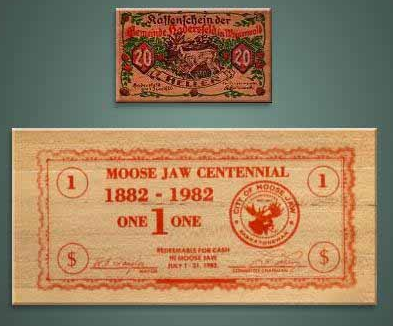
Pernah digunakan sebagai wang semasa darurat di Jerman semasa pemulihan selepas Perang Dunia I. Kerana darurat, wang dicetak juga daripada kerajang aluminium, kain sutera dan kad dari sisa-sisa perang. Pengumpul akan sanggup untuk membayar dengan harga yang tinggi untuk wang pelik ini, yang paling mahal adalah batu yang dicetak menjadi duit syiling pada masa itu.

8. Wang Dengan Ancaman Hukuman Mati (Amerika, ketika masih dijajah Inggeris)
US Dollar memang telah menjadi mata wang yang paling stabil dan dianggap sebagai safe heaven currency. Jika dilihat dari sejarahnya, mata wang ini telah banyak berpengalaman dalam memerangi para pemalsu wang. Pada masa-masa awal penjajahan Inggeris, sangatlah mudah untuk mencetak wang kerana banyak alat cetak beredar dan reka bentuk cetakan wang tidaklah terlalu rumit seperti sekarang

7. Wang Kumpulan Baucer (Vietnam)
Jika kita fikir wang yang boleh membeli segala-galanya, ia tidak. Wang Vietnam pada tahun 70-an berfungsi sebagai koleksi baucar yang hanya boleh digunakan untuk membeli pakaian dan peralatan.

6. Mata Wang Berbentuk Komoditi
Garam adalah salah satu barang tertua yang digunakan sebagai bayaran. Sebenarnya, kata “salary” (gaji) berasal dari bahasa Latin “salarium” iaitu wang yang telah dibayar kepada perajurit Rom untuk membeli garam.
Garam juga juga digunakan sebagai alat tukar (mata wang) utama di gurun Sahara selama berabad-abad lamanya, dan digunakan secara meluas di seluruh Afrika Timur. Biasanya, seseorang pada masa itu akan menjilat garam satu blok untuk memastikan garam tersebut asli dan memutuskan untuk membuat pecahan dari blok itu sebagai pecahan wang kecil.

5. Wang Pecahan Terbesar Di Dunia (Hungari)
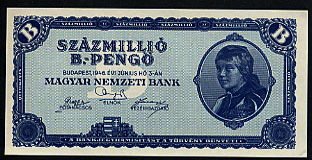
Inilah pecahan mata wang pemegang rekod sehingga kini. Dicetak oleh Hungary pada tahun 1946 dengan nominal 100,000,000,000,000,000,000 pengo. Ya! Seratus juta trilion pengo dengan kadar ketika itu hanya sekitar 20 US cent. Ini disebabkan Hungary mengalai hyperinflasi akibat kesan dari Peperangan Dunia Kedua.

4. Modifikasi Wang Kerana Rampasan Kuasa (Zaire)
Ketika rejim Joseph Mobutu dirampas kuasa pada tahun 1997 di Zaire (yang kini bernama The Democratic Republic of the Congo) Pemerintahan yang baru ketika itu terlalu sibuk untuk merekabentuk dan mencetak wang baru kerana jumlah wang ketika itu terhad

3. Kulit Tupai Sebagai Mata Wang (Rusia)
Beberapa kurun yang lalu, kulit tupai merupakan wang yang sah digunakan di Russia. Bahkan beberapa bahagian dari tupai mati ini seperti telinga, hidung, dan kuku-kukunya berfungsi sebagai “duit baki”.

2. Syiling Perak Dengan Bonus Air Suci (Kepulauan Palau)
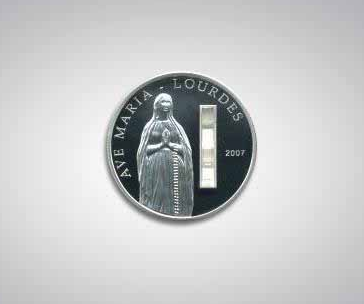
Jika di wang kertas USD ada “In God We Trust”, negara kepulauan Palau selangkah lebih maju. Negara ini pada tahun 2007 mencetak syiling perak dengan gambar perawan suci dan memasukkan bonus botol kecil mengandungi beberapa titis air suci dari sebuah mata air suci di Lourdes Perancis. Negara ini pernah juga memasukkan mutiara, bahkan batu meteor pada duit syilingnya

1. Wang Dari Batu (Pulau Yap, Kep. Solomon)
Di pulau Yap, sebuah pulau di Kepulauan Solomon, anda akan menemui “wang” terbesar dan teraneh di dunia: batu rai (semacam batu kapur). Wang ini berbentuk lingkaran dengan diameter 12 kaki dan berat 8 tan.
Tahukah anda? Penilaian nominal dari batu ini ditaksirkan bukan hanya berdasarkan saiz, tapi juga ditaksirkan berdasarkan pengorbanan menbawanya ke Pulau Yap, termasuk jumlah nyawa yang terbunuh kerana pengorbanan tersebut. Kerana bentuknya besar, wang ini dibiarkan terbaring di luar rumah pemiliknya, bahkan kadang-kadang di dalam hutan. Walaupun terbaring di mana sahaja, orang pasti mengetahui siapa pemiliknya. Apabila berlaku pertukaran pemilikan, akan dilakukan dalam upacara tertentu.

Clement Jouling ialah Perunding Unit Amanah berlesen (Licensed Unit Trust Consultant). Sekiranya anda berminat untuk mengetahui lebih lanjut tentang pelaburan unit amanah, boleh hubungi beliau terutamanya buat anda yang berada di Kota Kinabalu dan sekitarnya.